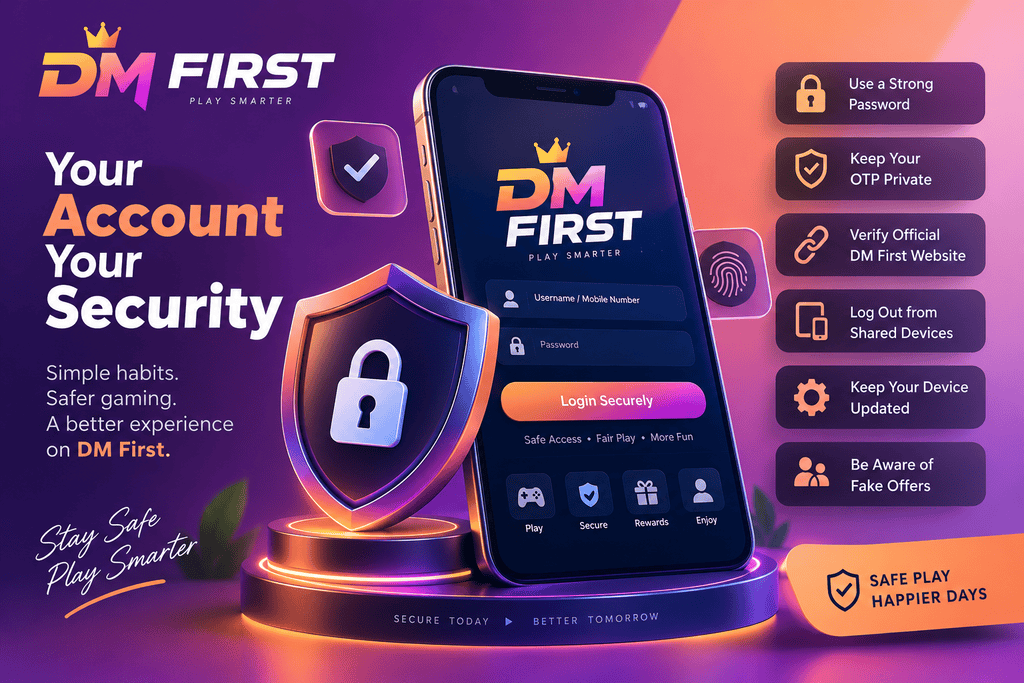
Using an online gaming platform is not only about finding games and exploring its features. Account security, login habits, device protection, and careful session management are equally important. For users searching for dm first, understanding these basic practices can make everyday account access safer and more organized.
This guide focuses on practical account-safety habits rather than repeating a standard download or registration tutorial. Whether you access DM First through a mobile device or browser, the same basic security principles should apply.
Why Account Safety Matters on DM First
An online account can contain personal information, login credentials, transaction details, and account activity. If someone gains unauthorized access, recovering the account can become difficult.
For that reason, DM First users should treat their account credentials as private information. A username, password, OTP, verification code, or payment PIN should never be shared with another person.
Good security does not require complicated technical knowledge. A few consistent habits can significantly reduce avoidable account problems.
1. Use a Strong and Unique Password
One of the simplest ways to improve dm first account security is to use a password that is difficult to guess.
Avoid passwords based on:
- Your name
- Mobile number
- Date of birth
- Simple number combinations
- Repeated characters
- Passwords already used on other websites
A strong password should be unique and difficult for another person to predict.
Using the same password across several websites can create additional risk. If another service experiences a security problem, a reused password could potentially expose more than one account.
2. Protect Your Login Information
Your login credentials should remain private.
Never send your password through public groups, social media comments, gaming communities, or unknown support accounts. Be particularly careful when somebody claims they need your password to “verify” or “activate” your account.
Legitimate account troubleshooting should not require you to publicly reveal your password.
If you believe another person has learned your password, change it as soon as possible and review your account activity.
3. Be Careful With DM First Login Pages
Search engines can display multiple pages discussing the same brand. A familiar logo or similar-looking page does not automatically prove that a website is genuine.
Before entering your credentials, check the complete website address in the browser.
Look for:
- Correct spelling of the domain
- Secure HTTPS connection
- Unexpected redirects
- Suspicious pop-ups
- Unusual requests for personal information
- Pages asking for credentials unnecessarily
Bookmarking a verified login page can also reduce the chance of accidentally visiting a misleading page later.
4. Never Share an OTP
An OTP should be treated like a password.
If DM First or another legitimate service sends a verification code to your phone, enter it only where you intentionally started the verification process.
Never forward an OTP to:
- Friends
- Unknown callers
- Social media contacts
- Unverified support accounts
- People promising bonuses or rewards
A person who asks for your OTP should immediately be treated with caution.
5. Review Your Active Sessions
Account security is not only about passwords. Devices and browser sessions also matter.
If you have logged into your account on a shared computer, another person’s phone, or a device you no longer use, make sure the session has been closed.
After using a shared device:
- Log out of your account.
- Close the browser or application.
- Avoid saving your password.
- Remove downloaded account information if necessary.
- Do not leave verification messages visible.
This is particularly important when using public computers or borrowed smartphones.
6. Keep Your Device Updated
A secure account also depends on the device used to access it.
Keep your operating system, browser, and security software updated. Updates frequently include security improvements and bug fixes.
Before installing any application or APK associated with dm first, verify the source carefully. Do not assume that a file is genuine simply because its filename contains the brand name.
Avoid modified, unofficial, or suspicious application packages.
7. Watch for Fake Offers and Messages
Online gaming brands can attract messages promoting bonuses, special rewards, referral opportunities, or limited-time offers.
Not every message containing the DM First name should automatically be trusted.
Be cautious if a message:
- Creates extreme urgency
- Requests your password
- Requests an OTP
- Asks for a payment to unlock an account
- Sends you to an unfamiliar website
- Promises unusually large rewards
- Contains suspicious shortened links
Instead of clicking immediately, independently check the relevant website and account information.
8. Use a Secure Internet Connection
When accessing an online account, a trusted internet connection is preferable.
Public Wi-Fi networks can be convenient, but users should be more careful when entering sensitive information through unknown networks.
For important account activity, use a trusted private connection whenever possible. Also avoid using unfamiliar computers where browser extensions, saved passwords, or malicious software could create additional risks.
9. Check Account Activity Regularly
Regular account checks can help identify unusual activity earlier.
Pay attention to:
- Unexpected login notifications
- Unknown devices
- Unrecognized account changes
- Transactions you do not remember
- Password-reset messages you did not request
- Changes to account information
If something looks unusual, stop using the account temporarily and investigate the issue through a verified support channel.
10. What to Do If You Cannot Access Your Account
Sometimes login problems are caused by ordinary issues rather than security incidents.
Before assuming your account has been compromised, check:
- Whether your internet connection is working.
- Whether you entered the correct username or mobile number.
- Whether Caps Lock is enabled.
- Whether your password was entered correctly.
- Whether the application or browser requires an update.
- Whether the service is temporarily unavailable.
If you suspect that someone else has accessed the account, change your password immediately if you still have access and review recent activity.
DM First Security Checklist
Before using your account, a quick checklist can help:
- Use a unique password.
- Keep your OTP private.
- Verify the website address.
- Avoid suspicious APK files.
- Do not use unknown links from messages.
- Log out from shared devices.
- Keep your phone and browser updated.
- Monitor unusual account activity.
- Use trusted internet connections.
- Contact support through a verified channel when necessary.
These habits are simple, but consistency is what makes them useful.
Responsible Account Management
Security should go together with responsible account management. Users should understand the rules and conditions that apply to any online gaming service before participating.
Set personal limits and avoid making decisions based on pressure, urgency, or promises of guaranteed returns. Gaming outcomes are not guaranteed, and users should only participate where the service is legally available to them.
Final Thoughts
Searching for dm first should not only lead users to information about downloading an app or completing a login. Understanding account security is equally important for anyone using an online platform.
Strong passwords, private verification codes, verified access pages, secure devices, and regular account checks can help users avoid many common security mistakes.
Before entering personal or financial information, always take a moment to verify where you are logging in and who you are communicating with. A few extra seconds of caution can prevent much bigger problems later.
For the latest platform-specific information, users should rely on the currently verified DM First website and its available support resources rather than unverified third-party instructions.